Project Overview
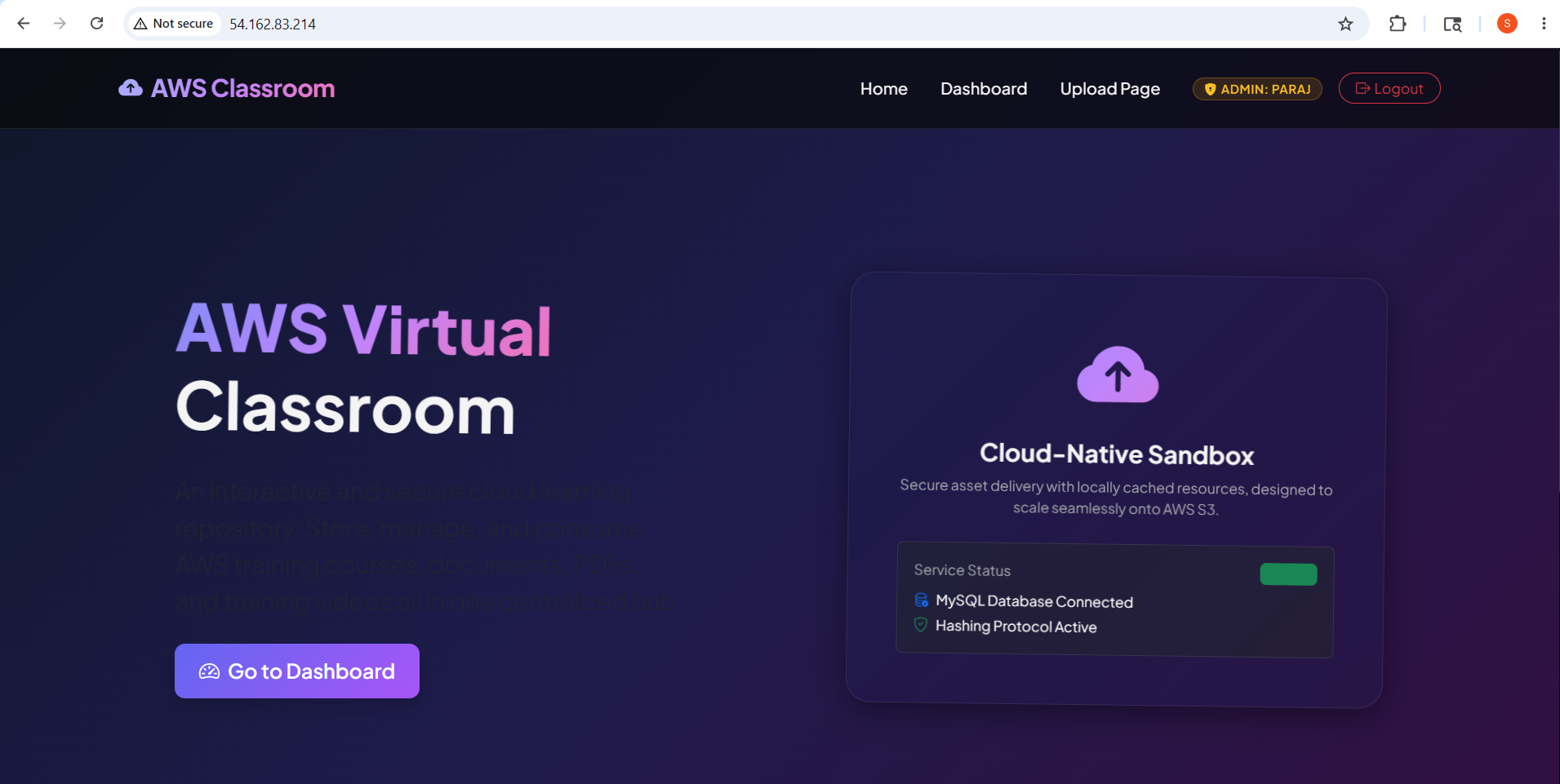
A production-ready cloud e-learning application leveraging AWS infrastructure (EC2, RDS, S3) with an Nginx/Gunicorn reverse proxy to provide scalable student access and resource management.
A production-ready cloud e-learning application leveraging AWS infrastructure (EC2, RDS, S3) with an Nginx/Gunicorn reverse proxy to provide scalable student access and resource management.
A production-ready cloud e-learning application leveraging AWS infrastructure (EC2, RDS, S3) with an Nginx/Gunicorn reverse proxy to provide scalable student access and resource management.
- On-premise learning platforms struggle to scale horizontally when dealing with spikes in student traffic during exam periods or course rollouts. - Storing large learning media assets like PDFs, lecture notes, and videos directly on a standard application server consumes local disk space, slows down performance, and risks total data loss if the server crashes. - Managing user data and credential state locally or within flat file systems introduces significant security bugs and makes zero-downtime application updates impossible.
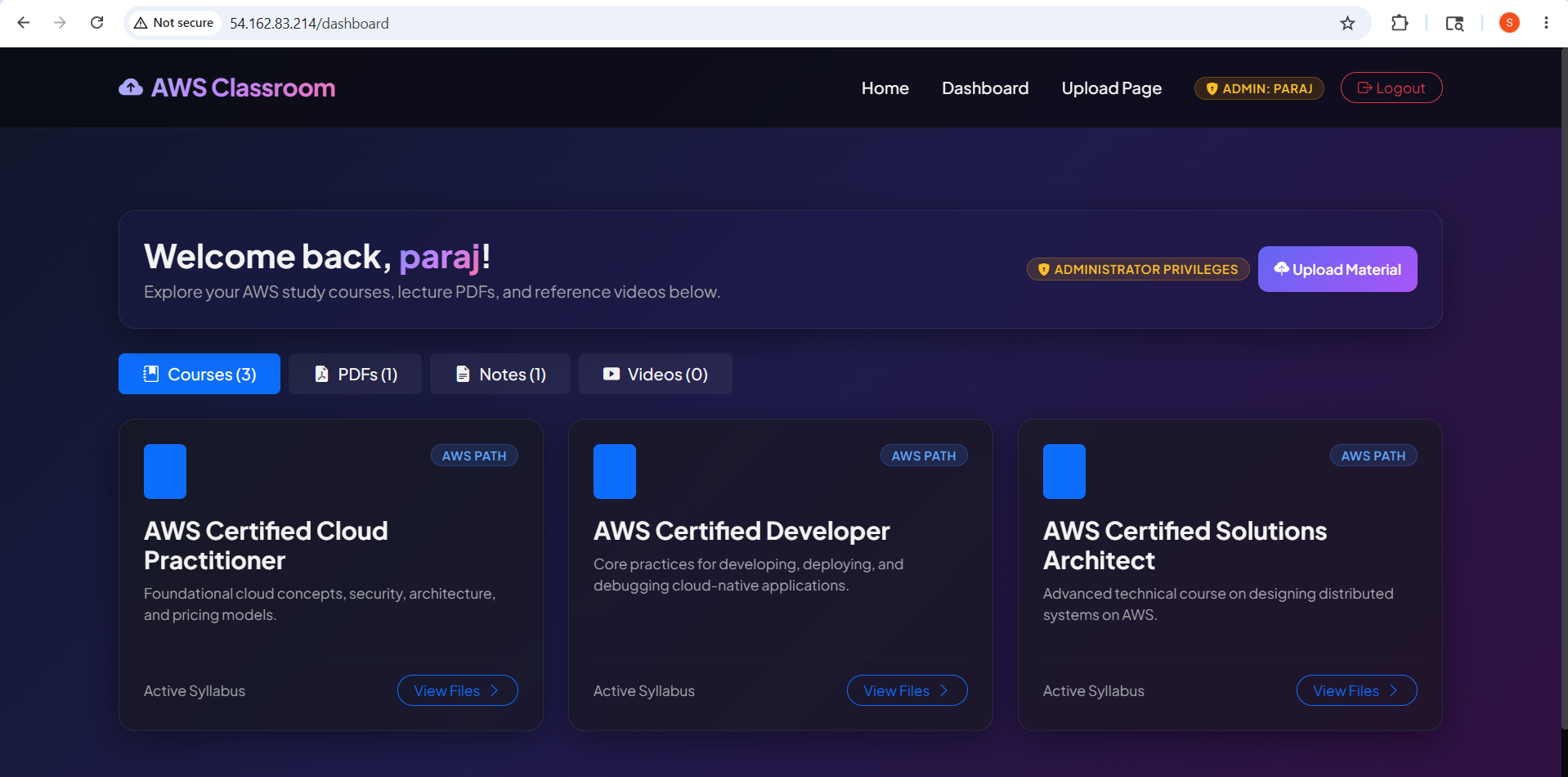
Engineered a secure, multi-tier web platform using Python Flask decoupled across standard AWS Cloud web infrastructure. Provisioned and configured an AWS EC2 Ubuntu instance acting as the primary host environment running a professional deployment pipeline consisting of Gunicorn WSGI and an Nginx reverse proxy wrapper to process client requests on Port 80. Relocated file system storage to an isolated AWS S3 bucket container utilizing the Boto3 SDK to process structured uploads smoothly. Abstracted relational user entities and course lookup schemas out of the codebase entirely into an AWS RDS MySQL database cluster, protecting sensitive access keys via a `.env` environment isolation system.
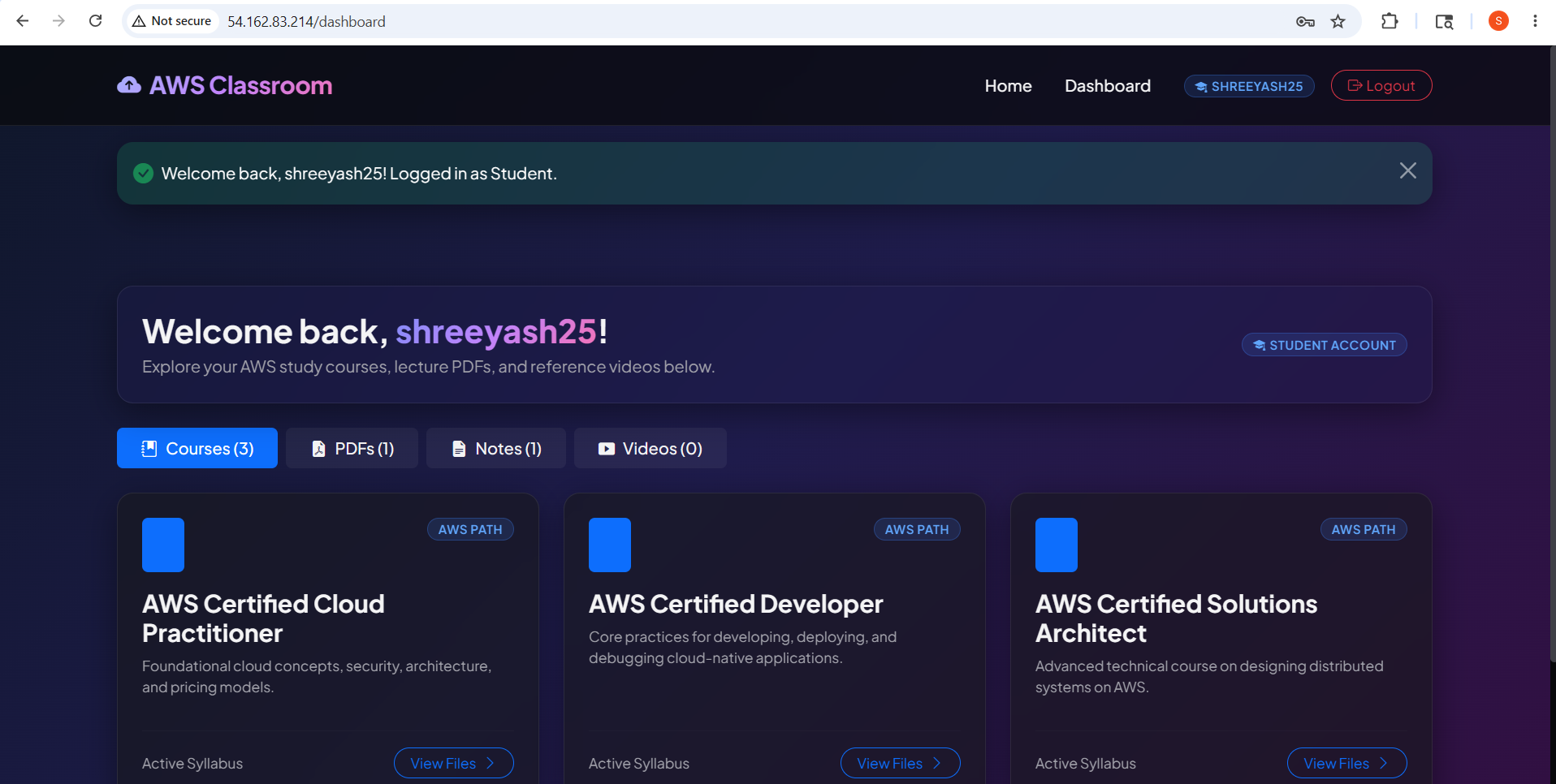
The architecture follows a classic cloud web topology. Incoming client HTTP traffic hits the public IP of an AWS EC2 instance on port 80, where an Nginx server processes and proxies requests internally over local ports via Gunicorn to the Flask runtime layer. The Flask application handles authentication loops and dashboard routes dynamically. User records are verified or created by communicating over a private subnet connection to an AWS RDS MySQL engine. Whenever an administrative resource is added, the application uploads the payload to a secure AWS S3 bucket and records the public object URL pointer back into the database for instant, zero-latency retrieval by the frontend view.
- Challenge: Running the Flask app locally via standard command runtimes works well for debugging but drops connections, lacks parallel worker execution, and exposes security risks in live public environments. - Solution: Configured Gunicorn to serve as a reliable WSGI application server running background system threads, routing traffic behind an Nginx engine layer to manage requests and handle error handling patterns properly. - Challenge: Exposing raw database login passwords and AWS IAM cloud root credentials inside the Git code repository leaks access keys to the public. - Solution: Structured a secure environment configuration design patterns using python-dotenv, separating variables entirely into an ignored local `.env` runtime file while using an example template for team collaboration.
- Achieved a highly resilient system architecture by offloading heavy static PDF downloads directly to AWS S3, ensuring zero compute load on the core Flask server during file reads. - Secured user authentication structures by implementing server-side cryptographic hashing via Werkzeug before storage rows are written to the MySQL instance. - Established a clean, scalable multi-tier web pipeline, separating routing (EC2), relational state (RDS), and asset binaries (S3).
Let's discuss how we can leverage these technologies and methods to build scalable systems for your engineering needs.